Blog-Facebook Advertising Costs UK: Benchmarks & Hidden FX Fees (2026)1499
Payment

Facebook Advertising Costs in the UK — What Your Business Actually Pays

James Carter
Business Finance Writer

How much do Facebook and Instagram ads cost in the UK? 2026 CPM, CPC and CPA benchmarks by placement and industry, what drives your costs, the hidden GBP→USD FX spread and Meta's 2% DST fee — and how to pay without losing on currency conversion.

2026.07.09 06:31:11 · 6minute(s)
Facebook Ads in the UK run on a live auction. There is no fixed price list — what you pay depends on your industry, your audience, your creative, and when you run your campaigns. This guide covers every angle: what drives costs, average CPM/CPC/CPA benchmarks for 2026, how to set a budget, and the hidden GBP→USD FX fees and 2% DST surcharge that most UK businesses never account for.

What Drives Facebook Ad Costs in the UK

Two businesses can run the same £2,000 budget and get completely different results. The gap comes down to six factors — five of which you can control.

The Meta Ad Auction

Every impression is sold in a real-time auction. Meta calculates a "Total Value" score combining your bid, ad quality, and engagement rate — a well-designed ad with a lower bid can win over a poor ad with a higher bid. Improving relevance directly reduces your cost per result.

Campaign Objective

The harder the action you ask Meta to optimise for, the more it costs. A video view costs pennies; a purchase costs significantly more.
Objective
Typical UK Cost
What It Requires
Awareness / Reach
£0.02–£0.10 per impression
Meta simply shows the ad
Traffic
£0.30–£1.50 CPC
User must click through
Leads
£5–£30 per lead
Form submission or sign-up
Sales / Conversions
£10–£80+ CPA
Full purchase
Pick the objective that matches what your business is actually paid on.

Audience, Ad Quality, and Seasonality

Three additional levers shape your costs. Audience size: narrow targeting exhausts quickly and drives up frequency — the same users see your ad repeatedly, engagement drops, and Meta charges more per impression. Broad-but-relevant audiences give the algorithm room to find buyers. Lookalike audiences built from your existing customer data typically outperform interest-only targeting by 20–40% on CPA.
Ad quality: Meta assigns each ad a Quality Ranking (below average, average, above average) relative to competing ads for the same audience. Above-average ranking effectively discounts your CPM; low engagement gets penalised with higher per-impression charges. Refreshing creative before it fatigues — when frequency climbs past 2–3 per user — is one of the fastest ways to bring costs down.
Seasonality: UK CPMs in Q4 (Black Friday, Christmas) are 20–40% above Q1. January and mid-summer are the cheapest windows. B2B advertisers often find lower CPMs outside retail peaks because fewer businesses compete for professional audiences. Plan launches around the UK calendar rather than fighting the auction at its most expensive quarter.

Industry

Some verticals are inherently more expensive because the customer is worth more — and every advertiser in that space bids accordingly. UK CPA ranges by industry for 2026:
Industry
Typical CPC
Typical CPA
Typical CPM
E-commerce & Retail
£0.45–£0.95
£15–£35
£8.50–£14.00
Fashion & Apparel
£0.40–£0.85
£12–£28
£9.00–£16.00
Health & Beauty
£0.55–£1.10
£18–£40
£10.00–£17.50
Food & Beverage
£0.35–£0.75
£8–£20
£6.50–£11.00
Financial Services
£1.20–£2.80
£35–£80
£15.00–£28.00
SaaS & Software
£0.90–£2.20
£30–£70
£13.00–£24.00
Education & Training
£0.60–£1.15
£20–£50
£8.00–£14.50
Legal Services
£1.00–£2.50
£40–£90
£14.00–£25.00
Finance, insurance, and legal are the most expensive verticals on Meta — but the customer lifetime value justifies the higher CPA. E-commerce and food/beverage are the cheapest, but margins are tighter.

Average Facebook & Instagram Advertising Costs in the UK

UK Meta campaigns average CPM ~$10.85 (~£8.55) — roughly half the US average of ~$20.48, making the UK one of the more cost-efficient Meta markets globally. CPC ranges £0.30–£1.50, and CPA £10–£80+ depending on industry. Benchmarks by placement:
Placement
CPM (USD)
CPM (GBP)
CPC (USD)
CPC (GBP)
Facebook Feed
~$7.47
~£5.90
~$1.06
~£0.84
Facebook Reels
~$6–$8
~£4.75–£6.35
~$0.80–$1.00
~£0.63–£0.79
Instagram Feed
~$7.68
~£6.05
~$3.35
~£2.64
Instagram Stories
~$6.25
~£4.92
~$1.83
~£1.44
Instagram Reels
~$5.50–$7.50
~£4.35–£5.92
~$0.70–$1.10
~£0.55–£0.87
By industry, costs diverge sharply:
Industry
Typical CPC
Typical CPA
Typical CPM
E-commerce & Retail
£0.45–£0.95
£15–£35
£8.50–£14.00
Fashion & Apparel
£0.40–£0.85
£12–£28
£9.00–£16.00
Health & Beauty
£0.55–£1.10
£18–£40
£10.00–£17.50
Food & Beverage
£0.35–£0.75
£8–£20
£6.50–£11.00
Financial Services
£1.20–£2.80
£35–£80
£15.00–£28.00
SaaS & Software
£0.90–£2.20
£30–£70
£13.00–£24.00
Education & Training
£0.60–£1.15
£20–£50
£8.00–£14.50
Legal Services
£1.00–£2.50
£40–£90
£14.00–£25.00
Finance, insurance, and legal are the most expensive verticals — but the customer lifetime value justifies the higher CPA. E-commerce and food/beverage are cheapest, but margins are tighter. The biggest hidden factor behind high CPA in any vertical is tracking accuracy — if your Meta Pixel and Conversions API are sending clean events, the algorithm learns and drives costs down. Broken tracking starves it of signal.
One number most guides forget: Meta adds 20% UK VAT on top of ad spend. A £1,000 budget bills at £1,200 — reclaimable if VAT-registered, but plan around the gross figure.

How to Set a Facebook Ads Budget for Your Business

Define what a "result" means for your business first — sale, lead, sign-up — then calculate backwards. A business targeting £25 CPA with 40 sales/month needs at least £1,000 media spend plus 20% VAT.

The Learning Phase and Test Budget

Meta's algorithm needs data before it can optimise. During the learning phase (1–2 weeks), costs are higher and less predictable because the system is testing which audiences and creatives deliver results. To exit, an ad set needs approximately 50 conversion events per week — below that threshold, the algorithm never learns and costs stay elevated indefinitely.
Target CPA
Minimum weekly spend
Recommended 4-week test budget
£10
£500
£2,000
£25
£1,250
£5,000
£50
£2,500
£10,000
Below £300/month, Meta cannot gather enough data to optimise. Start with one or two focused campaigns, not five.

The Hidden Cost Most UK Businesses Miss — GBP→USD FX & DST

Your Bank's FX Spread

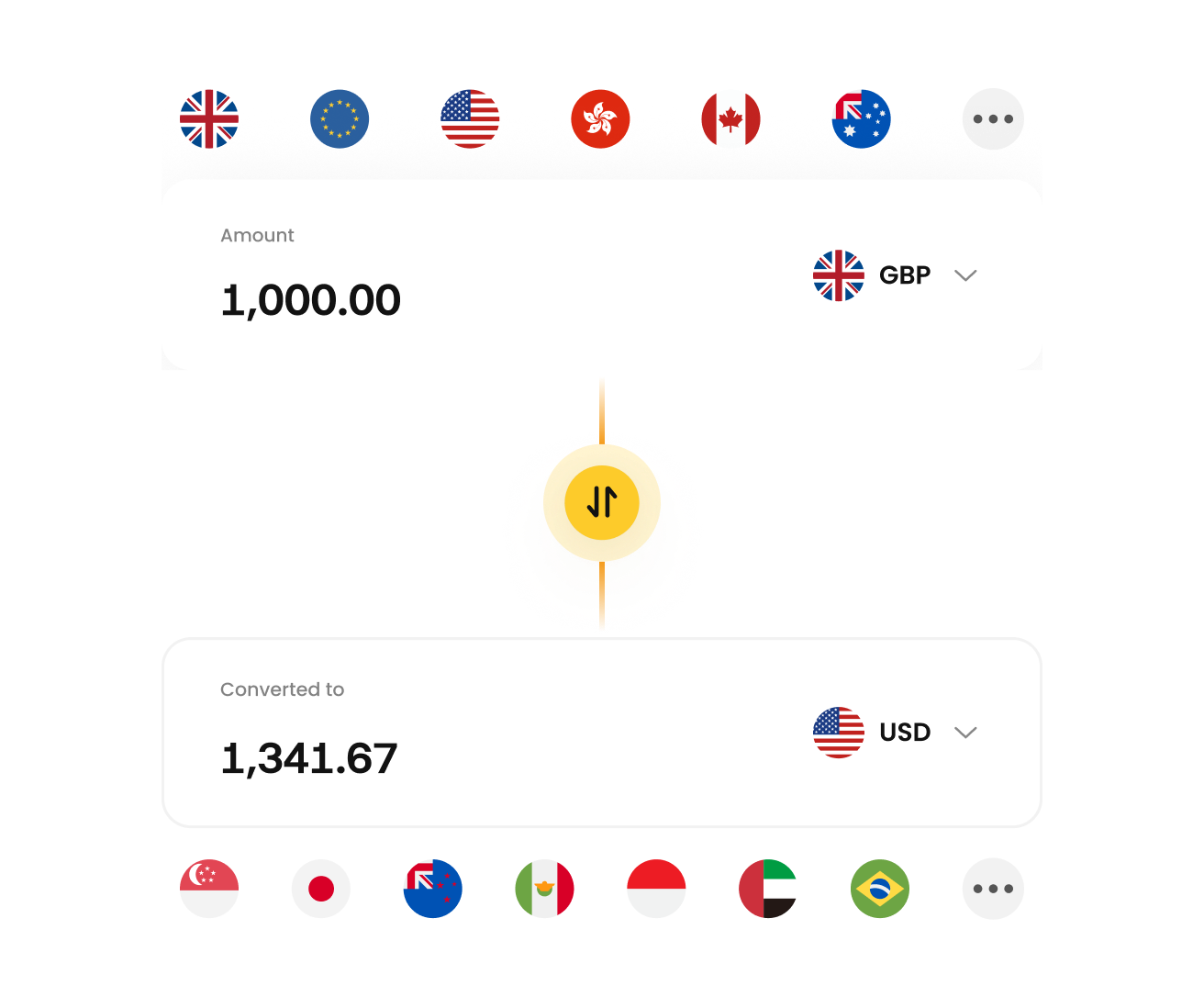
Meta bills in USD. When you pay with a GBP card, your bank converts at 1.5–3% above mid-market — invisible on your Meta invoice, visible only in the GBP debit vs USD received.
Budget (GBP)
FX loss at 1.5%
FX loss at 3%
USD actually reaching Meta
£5,000/month
£75
£150
£4,925→$6,265 vs £5,000→$6,350
£10,000/month
£150
£300
£9,850→$12,519 vs £10,000→$12,700
£25,000/month
£375
£750
£24,625→$31,295 vs £25,000→$31,750
At 2% spread (typical UK business card), £10,000/month loses £200 — 2 days of ads that never run. Over a year: £2,400 in pure FX fees.

Meta's 2% DST Surcharge

From July 2026, Meta adds a 2% Digital Services Tax surcharge on all ads targeting UK users. This is not a new tax — the UK DST has existed since 2020. What is new is that Meta no longer absorbs it; the full 2% is passed directly to advertisers.
Key details:
  • The fee applies based on where the ad is shown, not where the advertiser is based. A US company targeting UK audiences pays the same 2%.
  • Calculated on total ad spend — a £10,000 monthly budget incurs £200 DST, making total spend £10,200 before VAT.
  • No opt-out — the surcharge is applied automatically to all campaigns with UK delivery.
  • Cross-border advertisers targeting France, Italy, or Spain face 3%; Austria 5%.
Combined with bank FX spread, total hidden cost reaches 3.5–5%:
Cost layer
Rate
£10,000/month example
Bank FX spread (GBP→USD)
1.5–3%
£150–£300
Meta DST surcharge
2%
£200
Total hidden cost
3.5–5%
£350–£500/month
That £350–£500 produces zero advertising value — no impressions, no clicks, no conversions.

How UK Businesses Currently Fund Meta Ads

Most UK businesses use one of five methods to pay for Meta advertising. Each has a different FX cost profile and operational friction level.
  1. GBP business card — default option; 1.5–3% FX spread on every billing cycle; convenient but most expensive on currency. Some UK banks block recurring USD charges by default on debit cards.
  2. USD bank account — Barclays/HSBC offer USD accounts for business customers; eliminates per-transaction FX but requires minimum balances ($2,000–$5,000), wire delays (1–3 days), and £15–£25 fees per top-up. You still pay a spread when converting GBP to USD to fund it.
  3. Neobank cards — Revolut/Monzo/Starling: 0.1–0.5% FX on business tiers, best mainstream option for small-to-medium budgets. But Revolut's interbank rate caps at £1,000–£5,000/month on free plans, and Monzo/Starling limit spend above £10,000/month.
  4. PayPal — 3–4% FX, the most expensive option; failed payments can trigger Meta's ad-delivery suspension, which costs more in lost impressions than the FX fee itself.
  5. Bank wire top-up — bulk USD wire reduces conversion frequency; works for predictable high-volume spenders, but manual initiation, £15–£25 per transfer, and idle USD sitting in the Meta account between billing cycles.

PhotonPay — Virtual Cards for Meta Ads Spending

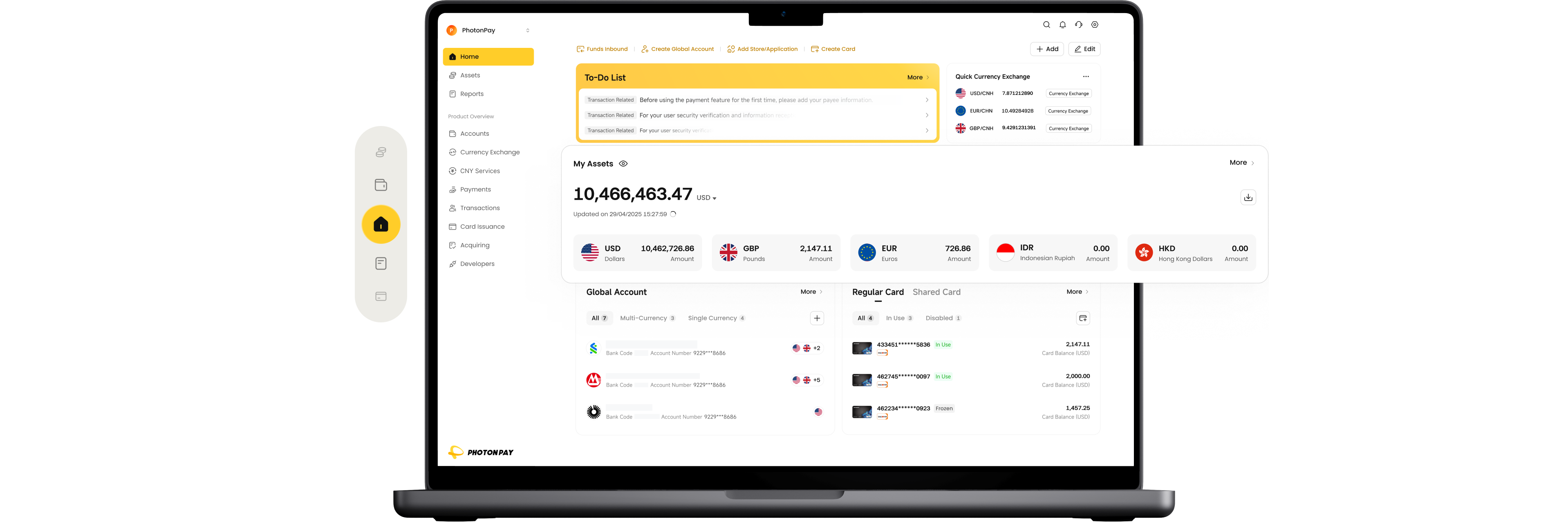
PhotonPay provides a multi-asset account with virtual business cards designed for international ad spend — eliminating the FX and payment friction that reduces every UK Meta Ads budget.
  • Dual-network virtual cards — issue Visa and Mastercard cards from one account; run both for redundancy, or choose the network that processes without issues on Meta's billing system
  • US billing address by default — each card carries a US address, bypassing address-verification friction on Meta's payment system
  • Direct USD or USDC funding — fund cards from a USD balance or from USDC stablecoins; either way Meta receives a standard USD charge, and the GBP→USD bank spread is removed from the equation
  • Stablecoin rail bypasses bank intermediaries — deposit USDC and fund virtual cards directly; no bank FX conversion, no bank risk filter, no 1–3 day wire delay
  • Per-account card controls — generate separate cards for each Meta Ad Account with specific spending limits, making budget management across multiple campaigns straightforward

Is Meta Ads Still Worth It for UK Businesses

Despite rising CPMs (+20% year-over-year in 2025) and the new 2% DST surcharge, Meta advertising remains the most cost-effective paid channel for UK businesses. Facebook CPC averages ~$0.70 for traffic campaigns — far below Google Ads' $5.26 average — and Instagram delivers higher engagement for visual brands. The question is not whether Meta Ads are worth it, but whether you are willing to lose 3–5% of every pound to bank FX spreads and DST surcharges that produce zero advertising value. A virtual business card funded through a multi-asset account — with the option to use USDC to bypass bank FX entirely — ensures that every pound you allocate to Meta Ads actually reaches your audience. Open a PhotonPay account to issue Visa and Mastercard virtual cards, fund them with GBP, USD, or USDC, and run Meta campaigns without hidden currency costs.

FAQ

Does Meta charge in GBP or USD for UK advertisers?

Meta bills all accounts in USD. GBP budgets trigger a bank FX conversion with a 1.5–3% markup — the spread is invisible on your invoice but visible in the difference between what your bank debits and what Meta receives.

Can I fund my Meta Ads account with stablecoins?

Yes. PhotonPay USDC deposits fund virtual cards directly — Meta sees a standard USD card charge, but the GBP→USD bank spread and risk filter are bypassed entirely.

Are Instagram ads cheaper than Facebook ads in the UK?

Instagram CPMs are lower (~$6.25–$7.68 vs ~$7.47 on Feed) but CPCs are higher (~$1.83–$3.35 vs ~$0.70–$1.06). Instagram delivers higher engagement for visual and DTC brands; Facebook suits lead generation and broad reach. Most UK businesses benefit from running both through a single Meta Ads Manager account.

Power Your Global Growth with PhotonPay