The European digital payments landscape has shifted permanently. With the full implementation of the Markets in Crypto-Assets (MiCA) regulation across the European Union, the era of the unregulated crypto ecosystem is officially over. For corporate treasurers, B2B platforms, and cross-border enterprises, this regulatory milestone transforms stablecoins from speculative digital instruments into institutional-grade payment rails.
For businesses operating in the United Kingdom, ignoring these developments across the English Channel would be a critical mistake. Despite Brexit, the UK and European economic zones remain deeply intertwined. British companies managing digital payments, cross-border supply chains, or international payroll must navigate a complex regulatory duality. To maintain seamless economic corridors with European counterparties, UK enterprises must master the nuances of the MiCA stablecoin ecosystem.
This guide provides an in-depth analysis of the best MiCA-compliant stablecoins available in 2026, details why UK enterprises must align with these European standards, and outlines how your business can leverage this next-generation infrastructure safely and efficiently.
Decoding the Framework: What is a MiCA Regulated Stablecoin?
To understand which digital assets are safe for corporate operations, one must first understand what makes a stablecoin compliant under European law. Under the comprehensive MiCA framework, the European Union classifies stablecoins into two distinct regulated categories based on their underlying asset backing.
1. E-Money Tokens (EMTs)
E-money tokens are digital assets intended primarily as a means of payment. Their core defining characteristic is that they are pegged to the value of a single official fiat currency, such as the Euro (EUR) or the US Dollar (USD). Under MiCA rules, EMTs fall within a strict extension of existing EU electronic money legislation. Issuers must be authorized electronic money institutions (EMIs) or credit institutions within the EU. They are legally mandated to offer holders a permanent, unconditional right of redemption at par value (1:1) at any given moment.
2. Asset-Referenced Tokens (ARTs)
Asset-referenced tokens are a broader category of crypto-assets that aim to maintain a stable value by referencing a basket of different assets. This basket can include multiple fiat currencies, physical commodities (such as gold), or even other digital assets. Because they reference a complex mix of assets rather than a single fiat currency, issuers of ARTs are subject to customized risk-management frameworks, independent capital requirements, and intense supervision by national competent authorities and the European Banking Authority (EBA).
The Elimination of Algorithmic Instability
A pivotal aspect of the MiCA regulation is its zero-tolerance policy toward algorithmic stabilization mechanisms. Historically, many stablecoins attempted to maintain their peg through automated smart contracts that dynamically minted or burned secondary tokens to balance market supply and demand without actual asset backing.
MiCA has effectively banned purely algorithmic stablecoins from being offered to the public or admitted to trading within the European Union. The law requires that every authorized stablecoin be fully collateralized by high-quality, highly liquid assets held in segregated, safeguarded custodial accounts. These reserves must be entirely ring-fenced from the issuer’s operational funds, protected from bankruptcy risks, and verified through mandatory, independent third-party audits and public attestations. Consequently, any token that relies solely on mathematical algorithms without a 1:1 physical asset reserve cannot legally operate in the European market, providing corporate buyers with unprecedented financial security.
The Post-Brexit Duality: Why UK Businesses Must Align with MiCA
Since the United Kingdom’s departure from the European Union, the UK Financial Conduct Authority (FCA) has been developing its own distinct regulatory architecture for digital assets and fiat-backed stablecoins. However, geographic and economic realities dictate that British businesses cannot operate in a vacuum.
Europe remains the UK’s largest and most vital trading partner. Whether your company is a London-based fintech platform, a Manchester-based e-commerce merchant, or a high-volume B2B logistics firm, your operational ecosystem likely touches European customers, suppliers, or banking networks.
There are several compelling reasons why UK corporations must explicitly integrate MiCA-compliant stablecoins into their financial stacks:
-
Cross-Border Interoperability: If a UK merchant sells goods or services to clients across France, Germany, or the Netherlands, those clients will increasingly demand to pay using fully authorized European digital currencies to ensure their own internal compliance. Accepting non-compliant tokens creates immediate regulatory friction for European counterparties.
-
Mitigating Banking Blockades: Traditional European banks and Crypto Asset Service Providers (CASPs) operating within the Eurozone face severe legal penalties if they facilitate transactions involving unauthorized digital assets. UK businesses that rely on non-MiCA stablecoins run an extremely high risk of having their incoming international transfers rejected, their corporate accounts flagged, or their processing lines abruptly frozen.
-
Optimizing Currency Corridors: By utilizing European e-money tokens that move natively across blockchain networks, UK enterprises can bypass the slow, expensive, and opaque legacy SWIFT network. Settlement happens in seconds rather than days, eliminating cross-border conversion fees and ensuring predictable cash flows.
The Top 5 Best MiCA Compliant Stablecoins for Corporate Settlement in 2026
Navigating the growing directory of digital currencies can be daunting for corporate finance teams. Based on strict compliance records, liquidity profiles, and structural integrity, the following five digital assets represent the premier MiCA-regulated stablecoins for enterprise use cases in 2026.
1. EURC (Circle) – The Premier Euro-Native Benchmark
Issued by regulated affiliates of Circle Internet Group, Inc., EURC stands as the gold standard for Euro-denominated on-chain liquidity. Built on the same institutional architecture as its dollar-backed sibling (USDC), EURC is an E-Money Token fully backed by euro-denominated cash and cash-equivalent reserves held in segregated accounts.
For UK businesses, EURC is the ultimate tool for executing zero-slippage B2B settlement with European vendors. It operates natively across multiple prominent blockchain networks, enabling UK corporate treasuries to hold, send, and receive digital Euros 24/7 without the high overhead costs traditionally charged by retail and commercial banks. Circle’s commitment to regular, independent third-party attestation reports provides corporations with complete transparency regarding reserve ratios.
2. USDC (Circle) – The Global Dollar Powerhouse
While the US Dollar sits outside the European Union's sovereign currency pool, USDC—also issued by Circle’s regulated entities—has successfully achieved full compliance under the MiCA framework. As the world's leading transparent digital dollar, USDC is backed entirely by short-duration US Treasuries and liquid cash deposits managed by tier-one financial institutions.
For UK enterprises engaged in global trade, digital advertising spend, or international freelance payroll, USDC serves as a vital bridge. It combines the massive global liquidity of the US Dollar with the airtight legal protections mandated by European regulators, ensuring that cross-border capital movement between the US, the UK, and Europe remains entirely frictionless.
3. EURI (Banking Circle) – Institutional-Grade Bank-Issued Liquidity
EURI represents a profound evolution in the stablecoin sector: a token directly issued by a fully licensed, brick-and-mortar commercial bank within the European Union. Launched by Banking Circle, EURI is a euro-denominated e-money token designed explicitly to meet the rigorous operational standards of MiCA.
Because EURI is integrated directly into a licensed bank's balance sheet and clearing infrastructure, it provides unparalleled safety for large-scale institutional settlement. It provides an absolute 1:1 backing held in segregated central bank or highly secure safeguarding accounts. For UK enterprises requiring high-volume commercial settlements, EURI bridges the gap between traditional banking confidence and decentralized speed.
4. EURe (Monerium) – The Programmable SEPA-Integrated Token
Issued by Monerium, an EU-licensed electronic money institution, EURe is a unique digital asset that blends blockchain technology with the traditional European banking system. EURe is structurally tied to a personal International Bank Account Number (IBAN).
This means that when a UK business interacts with an EURe token on-chain, the asset can be routed automatically and directly into the traditional Single Euro Payments Area (SEPA) network. It bridges the divide between decentralized applications and corporate bank accounts, making it an exceptional choice for automated B2B invoicing, smart-contract-driven supply chains, and programmatic corporate treasury management.
5. EURD (Quantoz Payments) – Next-Gen Programmable Money for Enterprise
EURD is a euro-backed e-money token issued by Quantoz Payments, a Dutch company regulated under European payment and electronic money laws. Fully collateralized and redeemable 1:1 for physical Euros, EURD is engineered primarily to facilitate enterprise-grade programmable finance, micro-transactions, and automated logistics networks.
EURD allows corporate finance teams to build automated conditions around cash movement—such as releasing payments only when a specific smart contract verifies that a physical shipment has cleared customs. For advanced UK supply chain operations interfacing with European trade ports, EURD provides a compliant, high-tech payment infrastructure.
Strategic Comparison of Top MiCA Stablecoins
|
Stablecoin
|
Issuer
|
Type
|
Primary Network Use Case
|
Best For
|
|
EURC
|
Circle
|
E-Money Token (EMT)
|
Multi-chain (Ethereum, Solana, etc.)
|
High-liquidity Euro B2B settlements
|
|
USDC
|
Circle
|
E-Money Token (EMT)
|
Global Multi-chain Networks
|
Global trade, SaaS billing, ad spend
|
|
EURI
|
Banking Circle
|
E-Money Token (EMT)
|
Banking Circle Clearing Infrastructure
|
Institutional and high-volume finance
|
|
EURe
|
Monerium
|
E-Money Token (EMT)
|
Multi-chain / Direct IBAN Link
|
Direct SEPA banking integration
|
|
EURD
|
Quantoz Payments
|
E-Money Token (EMT)
|
Algorand / Corporate L2 Rails
|
Programmable supply chains & micro-payments
|
Bonus Tip: Supercharge Your Stablecoin Workflow with PhotonPay
Understanding the regulatory architecture of MiCA stablecoins is a necessary first step, but implementing these assets into a traditional corporate treasury framework can introduce massive operational overhead. Managing corporate cryptography keys, establishing fragmented wallet architectures, and coordinating manual conversions between crypto and local fiat can overwhelm lean financial operations teams.
This is where
PhotonPay provides a definitive advantage. As a next-generation payment operating system, PhotonPay eliminates the operational friction of digital asset management by providing a unified, fully compliant platform built for global business.
Why Partner with PhotonPay for Your Stablecoin Operations?
-
Robust Regulatory Compliance: PhotonPay operates with absolute adherence to global financial standards. PHOTON DANCE FINTECH UK Limited is an Authorised Payment Institution, fully regulated by the UK Financial Conduct Authority (FCA) under FRN 801082. All crypto and stablecoin services are routed through strictly licensed and compliant affiliates, ensuring your corporate capital is fully safeguarded.
-
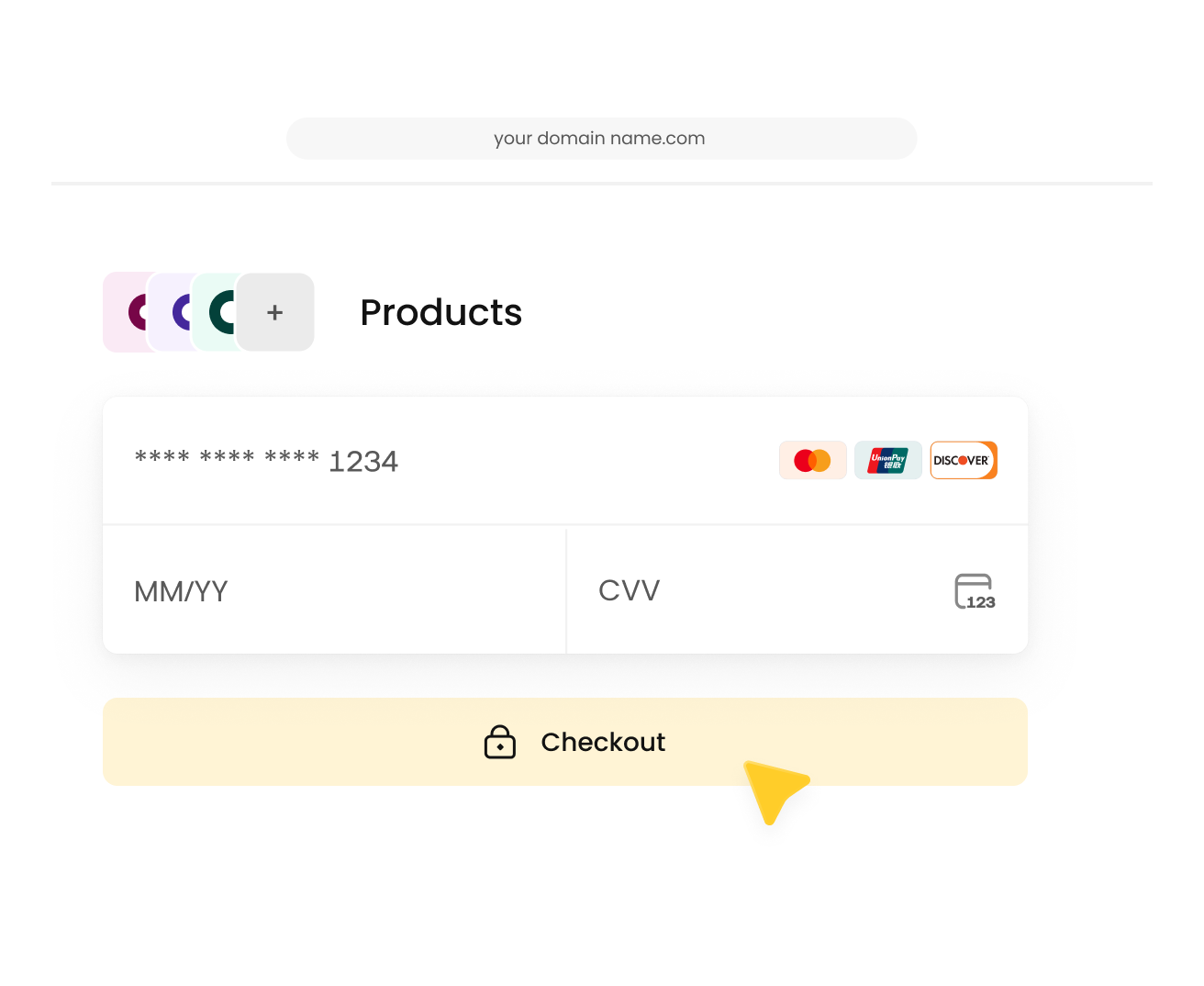
Unified Fiat & Stablecoin Checkout: Modern commerce requires payment flexibility. With PhotonPay’s Checkout infrastructure, you can empower your European clients to pay via their preferred MiCA-compliant stablecoins (such as USDC or EURC) or traditional local fiat corridors. The system handles the underlying complexity, automatically settling the funds directly into your wallet in the exact currency of your choosing.
-
Dual-Rail Global Movement: PhotonPay’s Movement engine combines traditional local fiat clearings with next-generation blockchain networks. Execute instant, programmatic payouts to suppliers, freelancers, and global trade partners across 200+ countries. Choose whether to distribute funds via stablecoin rails for instant settlement, or seamlessly off-ramp into local currencies in seconds.
-
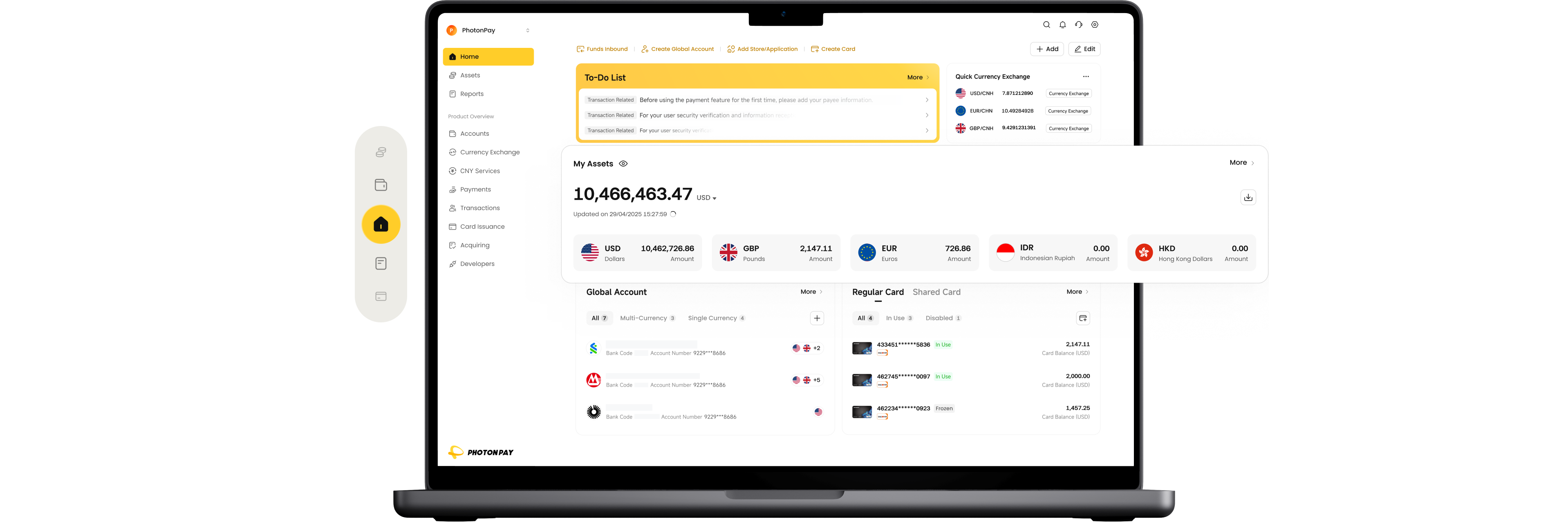
An All-in-One Multi-Currency Wallet: Consolidate your financial footprint. Establish multi-currency business wallets in minutes under your own clear corporate identity. Track every single fiat balance and regulated stablecoin transaction inside a centralized dashboard, eliminating manual spreadsheet tracking and achieving 24/7 financial visibility.
-
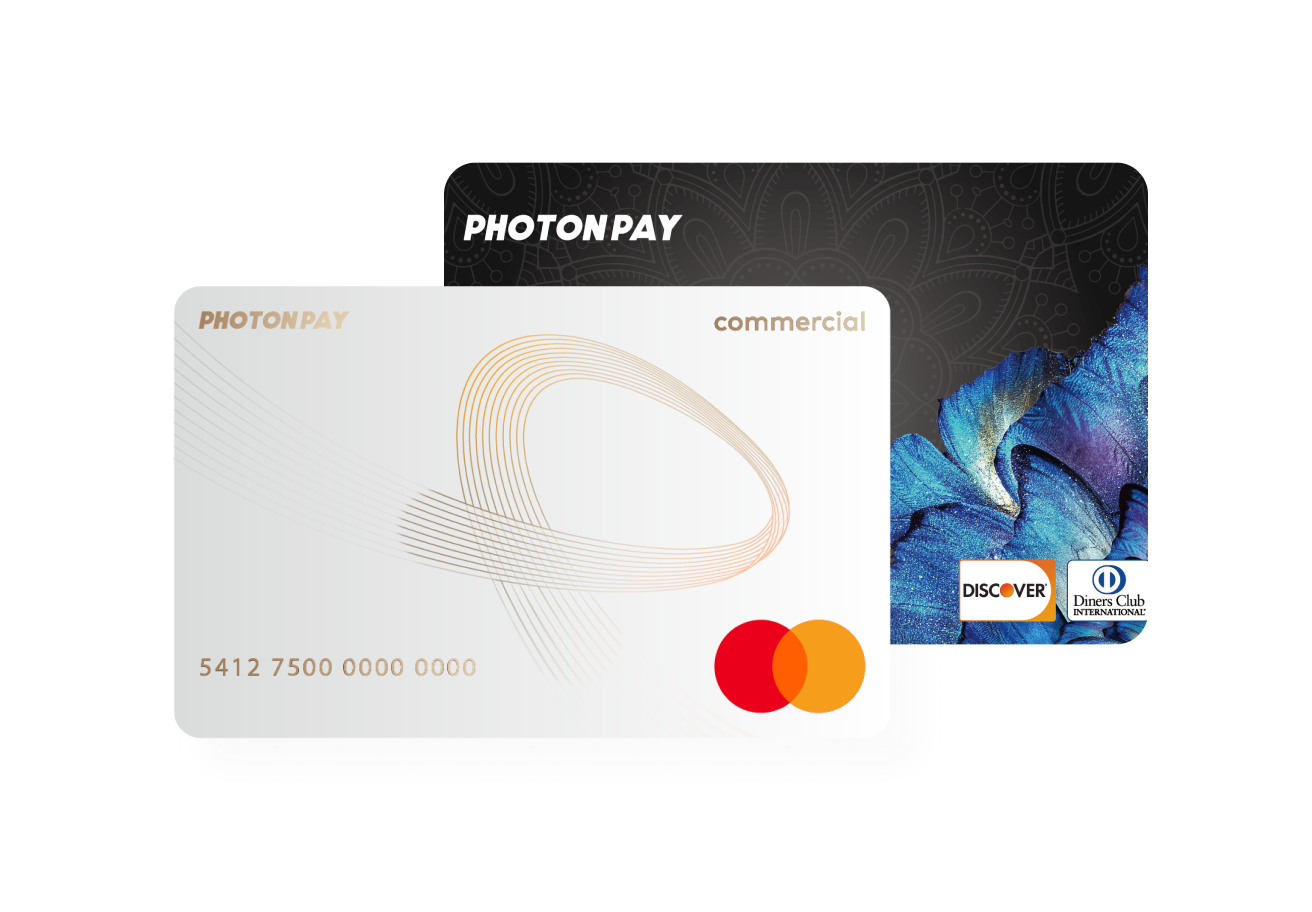
Borderless Corporate Cards: Unlock the purchasing power of your digital treasury. PhotonPay allows you to issue virtual or physical commercial cards instantly. Back your cards with stablecoins or fiat to seamlessly fund digital ad campaigns, corporate travel expenses, and software subscriptions across the globe.

The future of global commerce is digital, regulated, and stablecoin-native. Do not let compliance hurdles or legacy banking structures throttle your European expansion goals.